Some names just sound wrong in a good way. They twist your tongue, skip a beat, and leave a strange echo in your mind long after you say them. That’s the magic of Lovecraftian names.
If you’re building a story, a game character, a cult leader, or a username that feels ancient and alien, this guide gives you everything in one place. You’ll find real naming logic behind the style, ready-to-use name lists for every category, and a simple step-by-step method to build your own from scratch.
Random Lovecraftian Name Generator
Random Lovecraftian Name Generator
Create mysterious and cosmic horror-inspired names for dark fantasy stories, creatures, characters, games, and fictional worlds.
What Are Lovecraftian Names? (Origin & Meaning Explained)
Lovecraftian names are names inspired by H.P. Lovecraft’s cosmic horror universe. They sound ancient, alien, and hard to say on purpose, and that difficulty is the entire point.
The word “Lovecraftian” comes from the author himself, a horror writer from Providence, Rhode Island, who created the Cthulhu Mythos. His fictional gods, cities, and creatures all share one thing in common: names that feel bigger than human language can hold.
These names describe beings that exist outside normal human understanding — entities from beyond the stars, sunken cities older than history, and gods who don’t even notice humanity exists. The name itself has to carry that weight before the story even begins.
Today, this naming style has spread far beyond Lovecraft’s original short stories. Writers use it for horror fiction, game designers use it for monster and boss names, and everyday fans use it for usernames, pet names, and even brand names for horror-themed content. The style survives because it works on a basic level: strange sounds trigger a small sense of unease, even in people who have never read a single Lovecraft story.
This is also why the style has outlasted its original era. A name built in the 1920s still feels fresh a hundred years later, because it was never tied to a trend, a slang word, or a passing pop culture reference. It was built on raw sound, and raw sound doesn’t age the way vocabulary does.
The Linguistics of Lovecraftian Naming — How H.P. Lovecraft Built Alien Sounds
Lovecraft didn’t just invent random letters and call it a day. He built his names using real linguistic tricks, and understanding them is the fastest way to write convincing names of your own.
He borrowed sound patterns from Arabic, Greek, and Sumerian, then reshaped them into something unfamiliar. The result feels ancient because it echoes real ancient languages, even though the specific words are entirely invented. This is why names like Cthulhu or Azathoth feel like they could belong to a lost civilization, not a 1920s pulp magazine.
Three techniques he used again and again:
- Harsh consonant clusters — combining letters like “thl,” “khl,” or “gth” that rarely sit together in everyday English words. This forces the reader to slow down and sound the word out.
- Vowel compression — squeezing extra sounds into a short word, so a name feels like a longer, more terrible word crushed down into something pronounceable (Nyarlathotep, Yog-Sothoth).
- Broken rhythm — avoiding a smooth, sing-song flow so the name never feels friendly, musical, or familiar to the human ear.
Lovecraft also leaned on the idea that some sounds simply aren’t meant for human mouths. A name that flows too easily loses its power in this genre, because comfort is the opposite of cosmic horror.
This exact naming logic shows up in other corners of fantasy naming too. It’s part of the reasoning behind guild names in fantasy games, where sound and rhythm matter just as much as literal meaning. If a name is too easy to say and too easy to forget, it won’t carry the weight a cosmic horror name — or a memorable guild name — actually needs.
How to Pronounce Lovecraftian Names (Apostrophes, Phonemes & Sound Rules)
That apostrophe you see in names like R’lyeh or Ph’nglui isn’t random decoration. It marks a break — a place where human speech structure struggles to keep up with the sound underneath it.
Quick pronunciation reference table:
| Name | Common Pronunciation | Why It’s Hard to Say |
| Cthulhu | kuh-THOO-loo | Silent-feeling opening and doubled sounds |
| R’lyeh | RUL-yeh | Apostrophe forces an unnatural pause |
| Nyarlathotep | nyar-lah-THO-tep | Long, compressed syllable string |
| Azathoth | AZ-uh-thoth | Repeated “th” sound in one short word |
| Yog-Sothoth | yog-SO-thoth | Hyphen splits it into two harsh halves |
| Shub-Niggurath | shub-NIG-uh-rath | Heavy consonant stacking |
If you’re building your own name, a simple test works well every time: say it out loud without stopping halfway through. If you stumble, slow down, or need a second attempt, the name is doing exactly what it should.
Pronunciation guides also matter for search visibility, since “how to pronounce Cthulhu” and similar questions are some of the most common searches tied to this topic. Getting the sound right helps readers use the name confidently in conversation, games, and content of their own.
Standout Lovecraftian Names You’ll Actually Remember
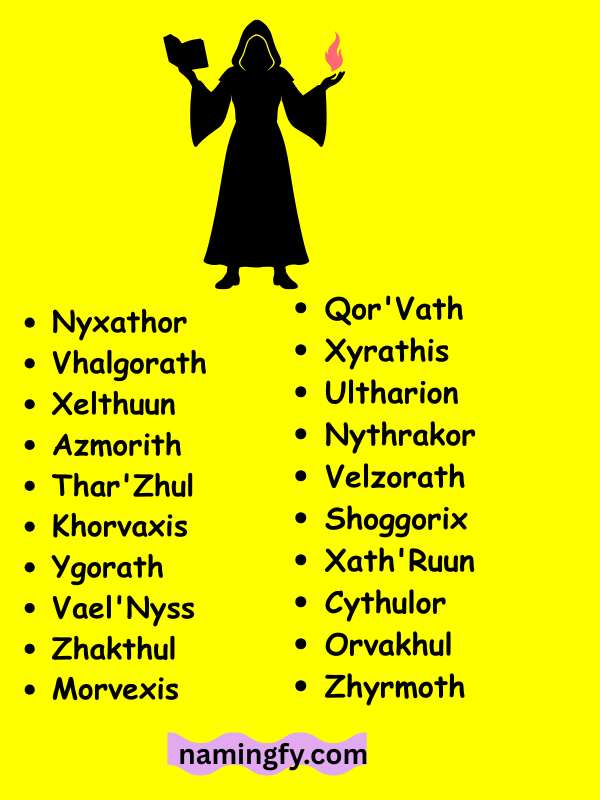
Some names blend into a long list and disappear from memory five minutes later. Others stick immediately. These names balance strangeness with a hook you can actually recall days later.
- Vhalgorath – a name that feels like a title and a threat at the same time
- Nemuraxi – a soft opening sound with a sharp, sudden ending
- Ur-Kethos – the hyphen adds extra weight and formality
- Zhaal’kiir – built specifically around an apostrophe pause
- Drovengal – heavy, slow, and deliberate in the mouth
- Ixothrane – flows fast but lands on a hard final syllable
These work well as a single standout name for a main villain, a book title entity, or a boss character in a game where players need to remember the name without notes.
Best Lovecraftian Fantasy Names for Worldbuilding
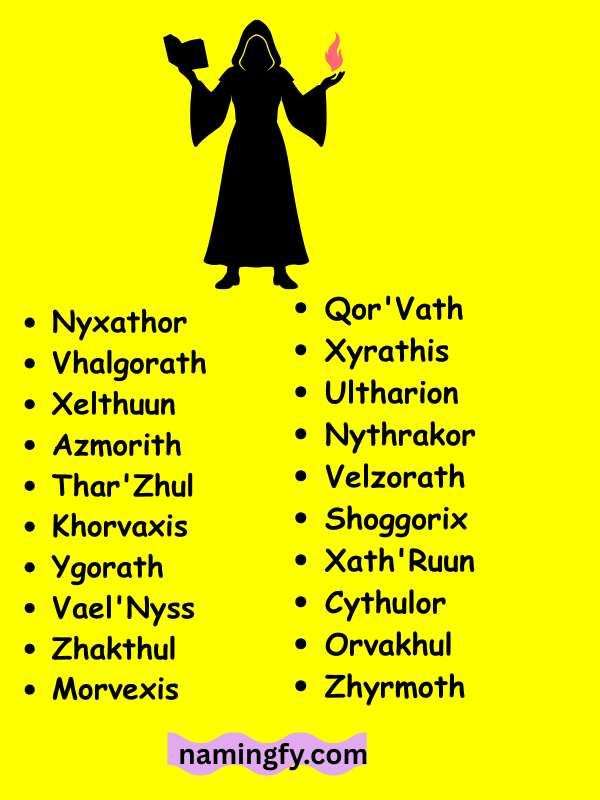
Worldbuilding needs names that fit into a bigger, connected system — gods, places, and people that all feel like they belong to the exact same universe.
- Xothrian Empire – a fallen civilization that vanished overnight
- Kaelmuir – a coastal ruin town swallowed by fog
- Sovreth the Unmade – a fallen god stripped of its original form
- The Vhessari Order – a scholarly cult obsessed with forbidden texts
- Nhalgorra – a forbidden region marked blank on every map
- Drennoch Reach – a mountain range said to hum at night
Keep a consistent sound pattern across your world’s names, using the same two or three consonant clusters throughout. It makes an entire setting feel intentionally designed instead of randomly generated.
A good trick is to build a small “sound bank” before you start naming anything. Pick five or six letter combinations you like — such as “vh,” “xul,” “or,” and “th” — and only pull from that bank when naming new gods, places, or characters. This keeps a huge cast of names feeling like they all came from the same forgotten language, even if you invent fifty of them over the course of a project.
Cool & Unique Lovecraftian Name Ideas
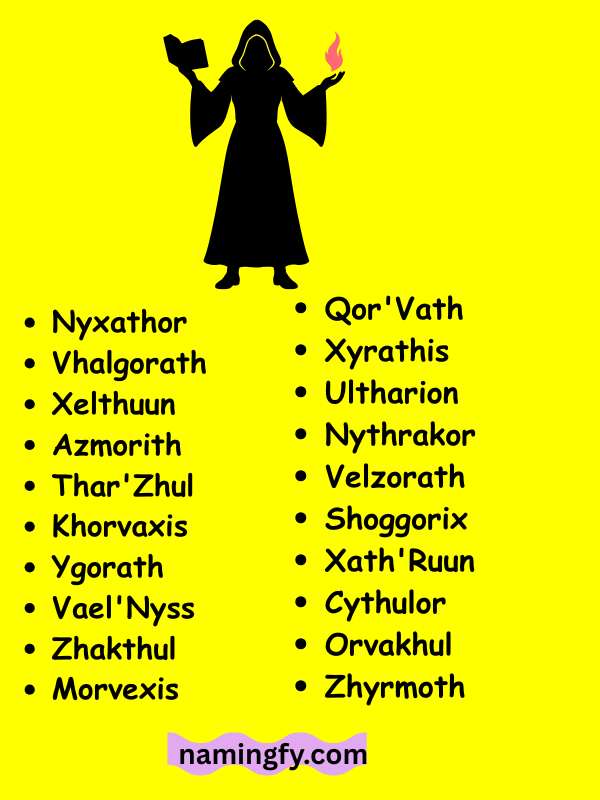
If you just want something cool that doesn’t fit a strict category, these ideas work across characters, creatures, and even brand names for horror-themed content and channels.
- Ashkarrus
- Vellithorn
- Nyxobane
- Thulgrave
- Morvexi
- Ketharis
- Zolrannis
Mix and match syllables from this list to create hundreds of unique variations without repeating a single full name.
Male Lovecraftian Names (Cosmic Horror & Ancient Titles)
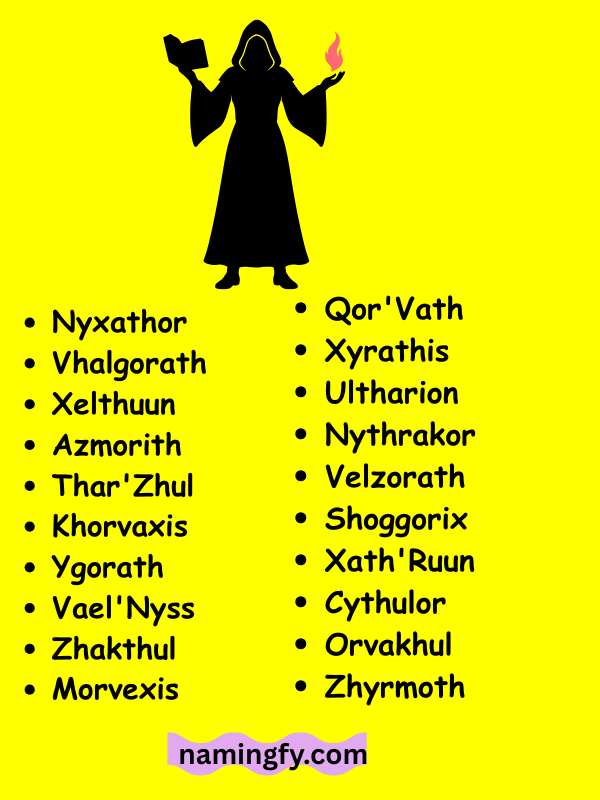
Male-coded Lovecraftian names often lean into hard consonants and a commanding, forceful rhythm that suggests authority or menace.
- Zorrathan
- Kaelvurn
- Draezoth
- Ulvrakan
- Morthelis
- Hexavor
- Vrannoch
These names suit ancient rulers, cursed scholars, or the human faces standing in front of something far larger than themselves.
Female Lovecraftian Names (Eldritch & Mysterious Ideas)
Female-coded names in this style often mix a softer opening sound with a strange, sharp ending, creating a contrast between beauty and dread.
- Nyxariel
- Sethuriel
- Vhaeloria
- Aszurra
- Ilyxene
- Cyravelle
- Morwenxi
This contrast is intentional — it makes the character feel graceful on the surface while hinting at something far stranger underneath.
Catchy Unisex Lovecraftian Names for Any Character
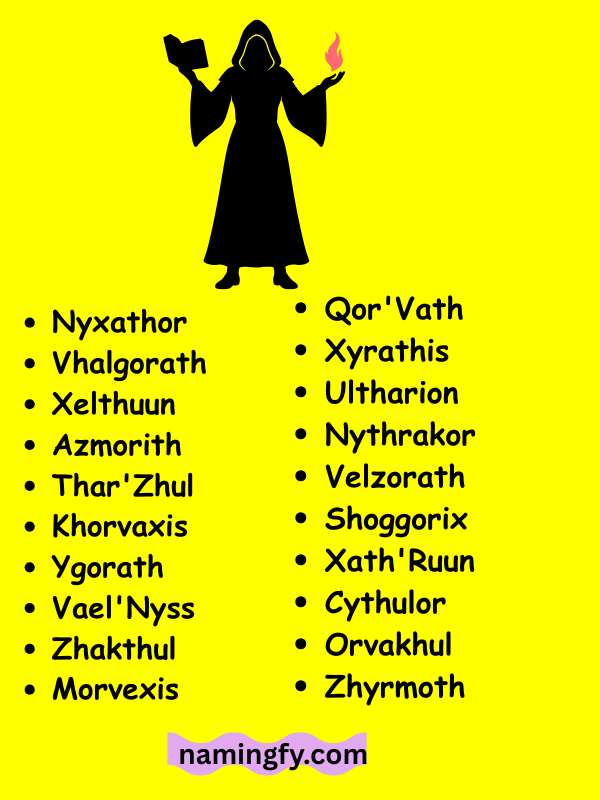
These names work for any character regardless of gender, which makes them especially useful for games that allow custom or non-binary character creation.
- Vorien
- Kethari
- Nyxel
- Zhalkiir
- Orvethis
- Sildrax
- Quovryn
Cosmic entities in Lovecraft’s own work rarely follow human gender rules at all, so unisex names actually fit the genre’s logic better than most fantasy naming styles.
Lovecraftian Human & Investigator Names (New England Style)
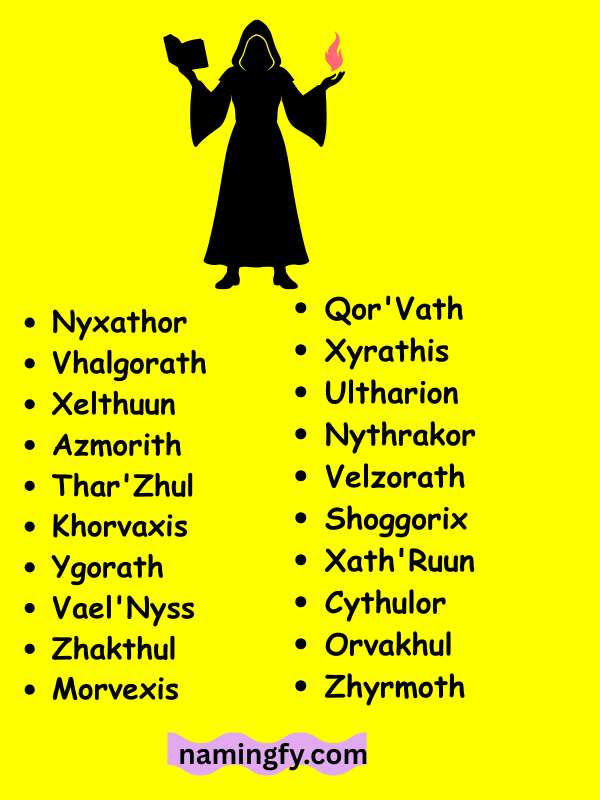
Not every name in this genre needs to sound alien. In fact, some of Lovecraft’s most effective names sound completely ordinary on purpose.
His human characters — the investigators, professors, and doomed narrators — use old, formal New England surnames that feel trustworthy and slightly outdated at the same time. Names like Randolph Carter or Herbert West sound like they belong to a colonial-era family directory, not a horror story, and that’s exactly why they work.
This is a very different naming rule from monster or god names. These names sound completely normal, which makes the horror unfolding around them feel closer to real life instead of a distant fantasy world.
- First names: Randolph, Nathaniel, Ambrose, Constance, Eleanor
- Old-family surnames: Whateley, Marsh, Pickman, Waite, Corey, Hartwell
- Full name combinations: Ezra Hartwell, Constance Whitmore, Elias Braddock, Miriam Corey
These names work best for narrators, university professors, small-town sheriffs, or doomed protagonists in horror fiction and tabletop campaigns set in a Lovecraft-style New England.
The trick with investigator names is restraint. Resist the urge to make them interesting on their own — the horror should come entirely from what happens to them, not from the name itself. A slightly formal, slightly old-fashioned name works better than a dramatic one, because it makes the character feel like a real person who wandered into something they shouldn’t have.
Eldritch Horror Names — Beings Beyond Human Comprehension
Eldritch names describe entities so strange that human minds can barely process their shape, let alone their intent. These names should feel unfinished, as if a piece of them exists outside human perception entirely.
- Ith’vahrok
- Quolvexen
- Y’zathrissa
- Ngathul
- Verixthul
- Xa’morrenth
Quick fact for clarity: “Eldritch” means strange or supernatural in a general sense. “Lovecraftian” specifically means it follows H.P. Lovecraft’s cosmic horror naming style and themes. In short: all Lovecraftian names are eldritch, but not all eldritch names are Lovecraftian.
Eldritch Names for Female Characters
If you specifically need eldritch-style names for female characters, these lean into the same alien, unfinished quality while keeping a slightly softer sound profile:
- Vhaelris
- Ny’thara
- Sorrivex
- Ulqara
- Zeirenna
Lovecraftian God Names: Outer Gods vs Great Old Ones Explained
Not all Lovecraftian gods hold the same rank in the Mythos. This distinction is one of the most searched questions on this entire topic, so here’s a clear, direct answer.
| Category | Role in the Mythos | Example Names |
| Outer Gods | Supreme cosmic forces that rule from beyond space and time itself | Azathoth, Yog-Sothoth, Nyarlathotep |
| Great Old Ones | Once ruled Earth directly, now dormant, imprisoned, or sleeping | Cthulhu, Hastur, Tsathoggua |
In short: Outer Gods exist above and outside the universe entirely, often described as blind, mindless, or fundamentally alien forces. Great Old Ones are extremely powerful but still bound to physical places on Earth, waiting for the right moment to return.
More god-style names you can use freely in your own stories and worlds: Zorvakhan, Ulnareth, Xyrakoth, Mhalgorath, Sethrannu.
Lovecraftian Cult & Organization Names
Every cosmic horror story needs a group of followers — a cult, a secret order, or a forbidden society that worships something humans were never meant to understand.
- The Whispering Circle
- Order of the Drowned Star
- The Vhessarite Congregation
- Cult of the Waiting Dark
- The Nine Watchers of R’lyeh
- Brotherhood of the Silent Tide
Use a formal structure word (Order, Circle, Congregation, Watchers, Brotherhood) combined with a strange or symbolic noun to build unlimited new organization names on your own.
Lovecraftian Place Names — Forbidden Cities, Realms & Dimensions
Lovecraft’s fictional places follow their own specific naming rule: short, harsh syllables combined with a strong sense of scale and age. Think Innsmouth, Dunwich, R’lyeh, and Kadath — all short, all heavy, all memorable.
- Vhalgroth – a sunken city visible only at low tide
- Nezrakhal – a forbidden mountain realm no map fully shows
- Ul’shaan – a dream-dimension gate between sleep and waking
- Korvethsen – a cursed coastal town with no working clocks
- The Hollow of Xul – an underground realm beneath a dead forest
These names work especially well for maps, tabletop campaign settings, and location-based storytelling where players or readers need to instantly feel the danger of a place before entering it.
Funny & Parody Lovecraftian Names
Not everything in this genre has to be terrifying. Fans often turn this exact naming style into comedy, especially for pets, casual usernames, or lighthearted community games.
- Cthulboi
- Nyarla-Toepick
- Dagon Fritters
- Shubby the Niggurath
- Xemu the Confused
- Cthul-Hugh
Parody names work by taking the same harsh sound structure and colliding it with a very human, very normal word — the contrast is where the humor comes from.
Lovecraftian Last Names & Surnames
Surnames complete a full name and add extra weight, especially for hybrid characters who are part human and part something else.
- Voskarian
- Mordreth
- Kaelvurn
- Ashgrave
- Verrathon
- Nyxholt
Pair any of these with a shorter first name from earlier sections to build a complete, believable full name in seconds.
Traditional & Magical Lovecraftian Name Ideas
These names lean into old magic and ritual themes, useful for spellcasters, occult scholars, ancient artifacts, or forbidden books within your story.
- Ythul’mora
- Sarkelian
- Vhraxis the Bound
- Old Kessek
- The Sigil of Nhorvath
- Grimoire of Ashqel
Powerful Lovecraftian Names and Their Hidden Meanings
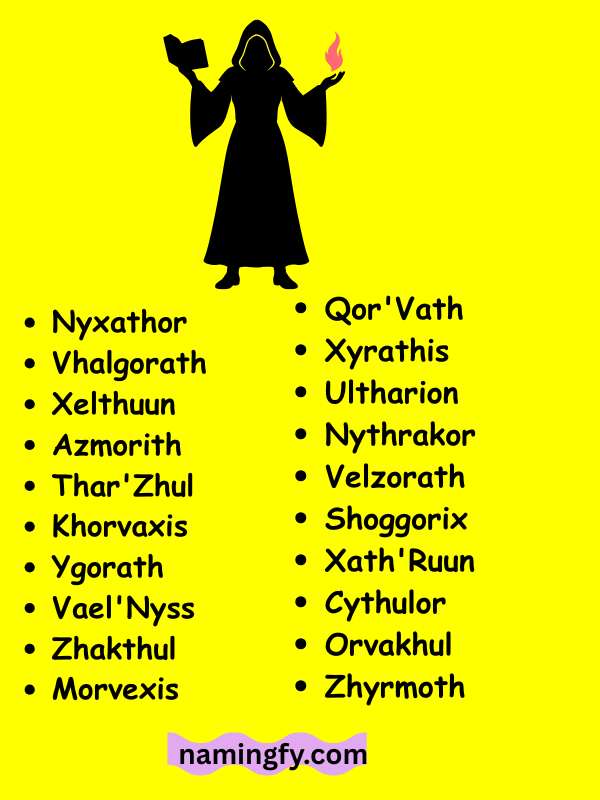
Some names carry an implied meaning even without an official dictionary definition, built purely through sound structure and emotional weight.
- Vorash-Kai — suggests “the devourer who waits”
- Ithranok — suggests “eye of the void”
- Kthalvor — suggests “the unspoken ruler”
- Zulgareth — suggests “born of collapse”
- Ny’thrassa — suggests “whisper of madness”
- Aqorath — suggests “star-born decay”
These meanings aren’t official Lovecraft canon — they’re story hooks and worldbuilding shortcuts you can build entire backstories around.
DnD & Tabletop RPG Lovecraftian Names (Call of Cthulhu, Delta Green)
Tabletop naming has one extra rule that fiction on the page doesn’t need to worry about: players need to remember the name out loud, every single session, without a script in front of them.
Best practice checklist for RPG entity names:
- Keep it to 2–3 syllables maximum
- Add one apostrophe or unusual consonant cluster, not five at once
- Avoid names so complex they turn into a table joke (“the thing we call Bob”)
- Make sure the name generates a small sense of dread, not laughter
Good examples for Call of Cthulhu, Trail of Cthulhu, or Delta Green campaigns:
- Vhorak
- Sel’noth
- Kaelbrix
- Yth’kar
- Dremnos
- Orvune
These same names also work well for Dungeons & Dragons campaigns that borrow cosmic horror elements, such as far realm creatures or aberrations.
Famous & Historical Lovecraftian Names from the Mythos
These are the names that started the entire genre, straight from Lovecraft’s original stories and the later writers who expanded his shared universe.
- Cthulhu — the Great Dreamer of R’lyeh, sleeping beneath the ocean
- Azathoth — the Blind Idiot God at the center of everything
- Nyarlathotep — the Crawling Chaos, the only Outer God who walks among humans
- Shub-Niggurath — the Black Goat of the Woods with a Thousand Young
- Hastur — the King in Yellow, tied to madness and forbidden plays
- Yog-Sothoth — the Gate and the Key, existing across all time at once
Learning these original names first gives you a strong foundation before inventing new ones of your own, since your invented names will naturally borrow their sound logic.
HP Lovecraft-Inspired Dog & Cat Names
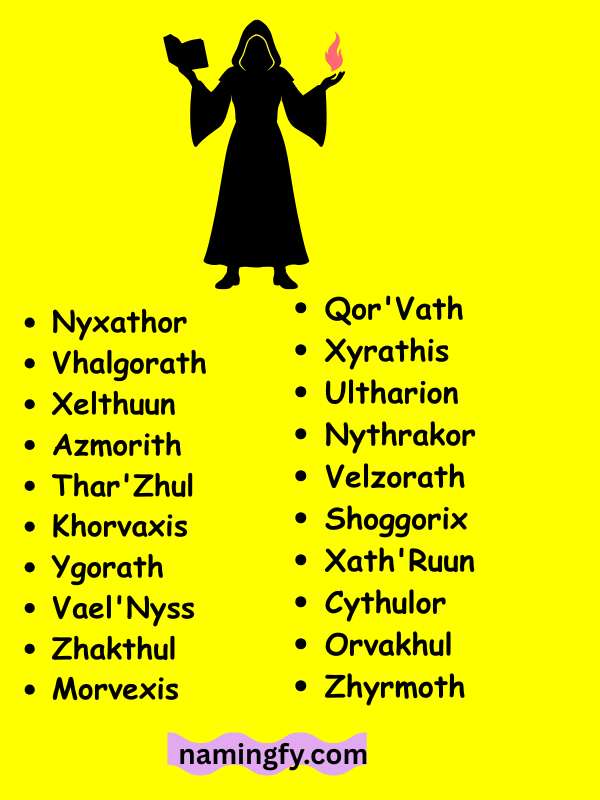
A little cosmic horror at home doesn’t have to be scary — it can just be fun. These names work especially well for pets with big, dramatic personalities.
- Cthulhu (the classic pick for any tentacle-loving pup)
- Nyx
- Dagon
- Miskatonic (Misky for short, everyday use)
- Innsmouth
- Arkham
- Shoggoth (great for a fluffy, shapeless-looking dog breed)
Lovecraftian Nicknames & Usernames for Gaming and Social Media
Usernames need a slightly different balance than full story names — short, punchy, and easy to type quickly on any keyboard.
- VoidWhisper
- ElderSpawn
- CosmicDread
- ArkhamMind
- RiftBorn
- AbyssCaller
- MindShattered
These work well across gaming platforms, forums, and social media profiles where a horror or fantasy theme fits your content.
Unique One-Word Lovecraftian Names
One word, full impact. These names work as story titles, brand names for horror content, or standalone character names that don’t need a surname.
- Vhorrath
- Nyxis
- Kethul
- Zaruun
- Ith’rok
- Sarquoth
Modern Lovecraftian-Style Names (Fresh & Contemporary Twist)
For sci-fi, cyberpunk, or modern-day horror settings, these names trim the extra syllables while still keeping the eerie, alien tone intact.
- Astrax
- Zylix
- Korthen
- Vexoth
- Nyqor
- Ixara
This shorter, cleaner style fits well in games and stories set in the present day or near future, where overly ancient-sounding names can feel out of place.
Themed Lovecraftian Names (Ocean, Dreams, Stars & Madness)
Lovecraft’s fictional world runs on a handful of core recurring themes. Pick one theme and build every name in your project around it for a consistent feel.
| Theme | Name Ideas |
| Ocean & Deep Sea | Vhalmar, Korrathis, Dagonspawn |
| Dreams & Sleep | Nyxdream, Somnavor, Kaelrest |
| Stars & Space | Astrileth, Vorstarn, Nythrax |
| Madness & Chaos | Chaosbound, Mindshear, Zulmadd |
A–Z List of Lovecraftian Names
A quick alphabetical starter list you can scroll through fast when you just need a name right now.
A–E: Azrathul, Bhalkor, Cthalyx, Drevoth, Elderwyn F–J: Frenzoth, Gorathis, Hexalor, Ithrune, Jul’karas K–O: Kaelvurn, Lorvexi, Morthelis, Nyxaria, Orvannis P–T: Parathon, Quolvax, Rhylloth, Sethuriel, Thryxxul U–Z: Ulzex, Vhorrakai, Wrathulon, Xazoth, Zynoth
Frequently Asked Questions About Lovecraftian Names
What makes a name “Lovecraftian”?
A Lovecraftian name uses harsh, unusual sounds and apostrophes to feel ancient, alien, and hard to pronounce on purpose.
What is the difference between Eldritch and Lovecraftian names?
Eldritch means strange or supernatural in general. Lovecraftian specifically follows H.P. Lovecraft’s cosmic horror naming style.
Are Lovecraftian names free to use in my own story?
Yes. Style-based invented names are free to use. Only specific trademarked canon names need extra care in commercial work.
What is the difference between an Outer God and a Great Old One?
Outer Gods are supreme cosmic forces like Azathoth. Great Old Ones, like Cthulhu, once ruled Earth and now lie dormant.
Can Lovecraftian names be used for both male and female characters?
Yes. Many names in this style are unisex by design, since alien entities rarely follow human gender rules.
How do I pronounce names with apostrophes, like R’lyeh?
Say it as a short pause between sounds, like “RUL-yeh.” The apostrophe marks a break, not a silent letter.
What’s the easiest way to create my own Lovecraftian name?
Combine a harsh consonant cluster with a compressed vowel sound, then test it out loud for an uneasy, hard-to-say feel.
How to Create Your Own Lovecraftian Name (Step-by-Step Guide)
- Pick a theme first — ocean, dreams, stars, madness, or ancient ruin. This gives every name you invent a shared identity.
- Choose a harsh consonant cluster — try combinations like “thl,” “khl,” “vor,” or “zul” as your starting sound.
- Add a compressed vowel sound — squeeze in extra syllables so the word feels ancient and slightly too long for comfort.
- Insert one apostrophe or hyphen — just one is enough to mark a break in the sound without overcomplicating it.
- Say it out loud, without stopping — if it feels slightly uncomfortable to pronounce in one breath, it’s working correctly.
- Test it inside a full sentence — say it alongside a title or description to check how it flows in real use.
- Compare it against existing Mythos names — make sure it doesn’t accidentally copy a famous name too closely.
Follow these seven steps and you’ll have a naming system you can reuse across an entire story, game, or fictional universe, not just a single one-off name.
Conclusion
Lovecraftian names work because they break the normal rules of language on purpose. Every harsh sound, apostrophe, and compressed syllable is built to make you feel small in front of something ancient, powerful, and only partly understood.
Whether you’re naming a god, a cult, a pet, or your next gaming username, the lists and rules in this guide give you a real starting point instead of a blank page. For deeper reading on H.P. Lovecraft’s life and the true origins of this naming style, Britannica’s biography of H.P. Lovecraft is a solid, trustworthy resource to explore next.

Emma is a passionate writer and name enthusiast with over 5 years of experience exploring the meanings, origins, and hidden stories behind names.




1 thought on “Lovecraftian Names Generator | Eldritch, Cosmic & Ancient Horror Titles”