Looking for a succubus name that feels dark, seductive, and unforgettable? You have landed in the right place.
This guide gives you 520+ succubus and incubus name ideas for 2026, sorted by style, origin, and mood. Whether you write fantasy fiction, play D&D, or design an anime character, you will find the perfect fit below.
Every name list here was grouped by tone and background rather than picked at random, so you can quickly filter for horror, romance, comedy, or tabletop gaming projects. Real mythology names sit alongside original creations, giving you both historical accuracy and fresh, unused options for whatever kind of character you are building.
Random Succubus Names Generator
Random Succubus Names Generator
Generate unique, mysterious, dark-fantasy-inspired succubus names for characters, stories, games, and creative projects.
Succubus Origins and Mythology
A succubus is a female demon believed to visit people in dreams and drain their energy. The legend goes back centuries across European and Middle Eastern folklore.
Quick Answer: A succubus is a mythical female demon linked to seduction, dreams, and night visits, while an incubus is her male counterpart.
Early stories describe succubi as shapeshifting spirits that appear beautiful to lure victims. Christian folklore, Jewish mysticism, and later horror fiction all shaped how we picture them today.
Medieval scholars wrote about these creatures in serious religious texts, treating them as real spiritual threats rather than simple stories. Sleep paralysis experiences were often blamed on succubus or incubus visits long before modern science explained the condition.
Different cultures gave this figure their own local twist. Slavic folklore has the rusalka, Scottish legend has the baobhan sith, and Irish myth has the leanan sidhe, all sharing similar seductive and dangerous traits.
The table below offers a quick side-by-side comparison for readers who want the core facts at a glance.
| Feature | Succubus | Incubus |
|---|---|---|
| Gender in folklore | Female | Male |
| Visits during | Sleep or dreams | Sleep or dreams |
| Common trait | Seduction, energy drain | Seduction, energy drain |
| Origin regions | Europe, Middle East | Europe, Middle East |
| Modern use | Fantasy, anime, games | Fantasy, anime, games |
Modern fantasy books, anime, and games like Dungeons & Dragons borrowed this legend and turned it into a popular character type. That is why succubus names now appear everywhere from novels to video games, each carrying a small piece of this long folklore history.
Understanding this background helps when picking a name too. A name rooted in real mythology, like Lilith or Naamah, signals a connection to ancient legend, while an invented name like Velara feels more open for a fresh, original character arc. Both approaches work well, and many writers actually blend the two by giving a character a mythological title alongside an invented personal name, which creates a richer sense of backstory without extra explanation needed.
Female Succubus Names
Female succubus names usually sound smooth, dark, and slightly hypnotic. These names work well for fiction, games, or original character design.
A strong female succubus name often mixes a soft vowel sound with a sharp consonant ending. This combination gives the name an elegant feel while still hinting at danger underneath, which is exactly the balance most fantasy readers expect from this type of character.
- Velara
- Nyana
- Hexyra
- Eliisse
- Lysara
- Faeana
- Yzaessa
- Shavine
- Vexia
- Xaneth
- Elidra
- Ziaeth
- Jinaria
- Ishmira
- Quenyra
- Sillise
- Hexora
- Malora
- Dralith
- Rhalyth
- Cynyssa
- Lorara
- Xantha
- Lilwen
- Valwen
- Luinne
- Peryne
- Kaeriel
- Yzaara
- Oressa
- Ziaika
- Solaria
- Taena
- Zywen
- Nyxeth
- Jinessa
- Vexwyn
- Eliyssa
- Isaessa
- Valyra
- Zyara
- Orinne
- Tiaaria
- Solwen
- Drawen
- Mireth
- Dainne
- Ishova
- Faearia
- Velora
- Fenora
- Tiatha
- Hexova
- Vellith
- Ziayra
- Faelyth
- Solyssa
- Eliith
- Vexora
- Krytha
- Hexessa
- Cynova
- Nyxena
- Jinlyth
Tip: Try pairing one of these first names with a short title, such as “Velara the Nightwhisper,” to give your character extra depth in a story or game bio. Titles also help readers remember a character faster than a name alone, especially in longer fantasy series with a large cast.
Male Succubus Names (Incubus)
The male version of a succubus is called an incubus. These names carry a heavier, sharper sound to match a darker character.
Incubus names often lean on hard consonants like K, X, and V. This gives them a more aggressive tone compared to the softer flow of typical succubus names, which helps readers immediately sense a different energy the moment the character is introduced.
- Grimvor
- Rezux
- Kroyn
- Lorand
- Felyn
- Vaneorne
- Rezok
- Zephax
- Mavor
- Moroth
- Pyreor
- Naxiel
- Haxius
- Rezath
- Felael
- Joror
- Jorand
- Malyn
- Malimus
- Vororn
- Vaneash
- Orael
- Loryn
- Maash
- Maor
- Osek
- Haxen
- Malash
- Felek
- Raxael
- Haximus
- Sarael
- Vorok
- Zephoth
- Morius
- Lorvor
- Osius
- Maland
- Malax
- Krovor
- Felash
- Xalek
- Pyreus
- Vaneen
- Raxand
- Malen
- Kaelorn
- Orek
- Zephus
- Morimus
Tip: Incubus names read well as single words without a surname. Keep them short so they sound punchy during dialogue or combat scenes, especially in fast-paced fantasy fiction or game dialogue where longer names can slow down the pacing.
Succubus Names in Mythology
Some succubus names come directly from real folklore, not fiction. These carry deeper cultural roots and religious history.
- Lilith
- Naamah
- Agrat Bat Mahlat
- Eisheth Zenunim
- Empusa
- Lamia
- Lilitu
- Mahalath
- Rahab
- Obizuth
- Onoskelis
- Alu Demon
- Lilim
- Vorvolaka
- Djinn Qarinah
- Rusalka
- Baobhan Sith
- Leanan Sidhe
- Melusine
- Yara-ma-yha-who
Lilith is by far the most famous name here. Jewish folklore describes her as Adam’s first wife, later turned into a night demon associated with seduction and danger.
Naamah and Agrat Bat Mahlat appear in later Kabbalistic texts as part of a group sometimes called the four queens of demons. Writers researching authentic mythology often start with these names before creating original ones.
Lamia comes from Greek mythology instead, describing a figure who preyed on children rather than adults, showing how the succubus archetype shifted meaning across different regions and time periods.
Incubus Names
Incubus names often sound short, forceful, and commanding. They work well for villain characters or dream-based horror stories.
- Ralion
- Xaror
- Baelion
- Sorax
- Quenyx
- Quenorin
- Baelez
- Coron
- Fenael
- Talael
- Vekon
- Halien
- Daryx
- Soryn
- Baelyn
- Corien
- Vekyn
- Sorez
- Karyx
- Inux
- Vekar
- Karux
- Elus
- Urath
- Yoryx
- Corion
- Oryn
- Sorael
- Corez
- Galez
- Inorin
- Loryx
- Coryx
- Halor
- Jaxorin
- Oron
- Ralar
- Jaxyn
- Zalus
- Quenion
- Ralath
- Vekael
- Elath
Tip: Incubus names built around a single strong syllable, like “Vek” or “Ral,” tend to stick in a reader’s memory longer than longer, complex ones. Short names also work better in fast-paced action or combat scenes where dialogue needs to move quickly.
Succubus Demon Names
If you want something darker and heavier, these demon-style names fit horror and gothic themes well. They tend to use harsh sound combinations that feel less human and more otherworldly.
These names work especially well for characters meant to feel ancient or powerful, since the unusual sound patterns suggest a being far older than any human language.
When reading these out loud, try breaking them into smaller syllables first. This makes even the longer, more complex names easier to pronounce naturally during dialogue or narration.
- Baelythra
- Oraxyx
- Pythyx
- Baelimor
- Malyx
- Azymora
- Heximor
- Nythyx
- Zethazkar
- Moryx
- Morothul
- Kalyx
- Vorimor
- Kalabal
- Lixazrael
- Malazkar
- Vorazoth
- Jorivor
- Hexothul
- Voryx
- Kroyx
- Xerazuul
- Naxoreth
- Lixyx
- Azimoth
- Oraximor
- Vexurath
- Kalimoth
- Jorymora
- Malurath
- Jorazoth
- Jororeth
- Lixoreth
- Kalivor
- Morurath
- Krooreth
- Kroazoth
- Pythivor
Tip: Demon-style names work best when spoken slowly and dramatically. Save these for boss characters or major antagonists in your story, since using this style too often can make every character start to sound the same.
List of Succubus Names
Here is a quick combined snapshot of the most searched succubus name styles in one place, so you can compare them fast.
| Category | Style | Example |
|---|---|---|
| Female | Smooth, seductive | Velara, Nyxeth |
| Male (Incubus) | Sharp, dark | Grimvor, Zephax |
| Mythology | Historical, real | Lilith, Naamah |
| Demon | Heavy, gothic | Baelythra, Moryx |
| Anime | Soft, playful | Suzuka, Hanami |
| Cute | Light, fun | Bubbly, Rosiebloom |
This table gives a fast overview before you scroll through the full lists above and below. Pick the row that matches your project’s tone, then jump to that section for more options.
Which Category Should You Pick?
Think about your character’s role in the story before choosing a category. A main villain usually needs a demon or evil-style name, while a side character or comic relief fits better with cute or anime options. Supporting characters often work well with unique or popular names, since they need to feel memorable without stealing focus from the story’s lead.
Genre also matters a lot here. Horror stories lean toward mythology and demon names, romance-leaning fantasy fits seductive names, and lighter anime-style projects work best with cute or Japanese-style options. Matching the category to your genre keeps the name feeling natural instead of out of place.
Audience age matters too. Content aimed at younger readers or general audiences usually reads better with cute, good, or unique names, while mature horror or adult fantasy content can safely lean into evil or seductive categories without feeling mismatched. Keeping this balance in mind from the start also makes future marketing and cover design easier, since the name and visual tone should always match.
Christian Succubus Names
In Christian folklore, succubi are described as fallen spirits that tempt men in their sleep. Early religious texts treat them as symbols of sin and temptation.
Medieval church writers often linked these creatures to broader teachings about self-control and spiritual discipline. The succubus became a kind of cautionary symbol used in sermons and moral stories across several centuries.
Names tied to this tradition often come from demonology texts and old church writings rather than fantasy invention.
- Lilith
- Naamah
- Astaroth
- Belphegora
- Obizuth
- Rahab
- Mahalath
- Agrat Bat Mahlat
These names appear in historical demonology lists, including the Lesser Key of Solomon and related medieval texts. Writers often use them for horror or religious-themed fiction.
Using these names respectfully means treating the source material as folklore and history rather than mockery. Many horror and dark fantasy authors research the original texts closely before writing, which adds authenticity to the final story.
Some early theologians debated whether succubi were real spirits or simply explanations for temptation and guilt. That debate itself has inspired countless horror stories and religious-themed fantasy novels over the years.
Anime Succubus Names
Anime succubus characters usually get soft, playful names instead of harsh, demonic ones. This keeps them charming even when their role is mischievous.
This genre often turns the succubus into a comedic or romantic character rather than a pure villain. Because of that shift, names here tend to sound closer to typical anime heroine names than traditional demon names.
- Saechi
- Suzuna
- Shiroru
- Emimi
- Yukimi
- Shirone
- Naoru
- Akachi
- Hanaru
- Yukina
- Shirona
- Kayane
- Hanane
- Mikuchi
- Yumina
- Suzuka
- Hanana
- Akaru
- Kurochi
- Hanayo
- Renmi
- Rinna
- Hanaka
- Rinko
- Hanami
- Saehime
- Akara
- Kuromi
- Kayako
- Meimi
Tip: Anime succubus characters often get a nickname alongside their full name, like “Suzuka-chan,” to sound friendlier in casual scenes. This small detail helps distinguish a comedic or romantic succubus from a more traditional demonic one.
Succubus Names and Meanings
Adding meaning to a name makes a character feel more real. It also gives readers a small clue about the character’s personality before they even appear on the page.
Here is a small table pairing names with their suggested meaning.
| Name | Meaning |
|---|---|
| Lilith | Night monster, first temptress |
| Nyxara | Born of darkness and night |
| Seraphine | Fiery, burning one |
| Vexara | She who torments |
| Morrigana | Phantom queen |
| Delvira | Dweller of desire |
| Ashkira | Ember spirit |
| Ravenna | Dark wing |
| Zaraphine | Golden shadow |
| Isoldra | Fair but fatal |
| Carmindra | Song of ruin |
| Belphegora | Deceptive charm |
| Astravel | Star of temptation |
| Kryssandra | Cold beauty |
| Velanoire | Veiled in black |
Feel free to mix and match a first part from one name with an ending from another. This is an easy way to build a completely custom name while keeping a similar meaning and sound.
Meanings also help with world-building beyond just the name itself. A writer can reference a name’s meaning inside dialogue, such as another character calling someone “the Night-born” instead of using their full name, which adds a layer of mystery to the story.
Cute Succubus Names
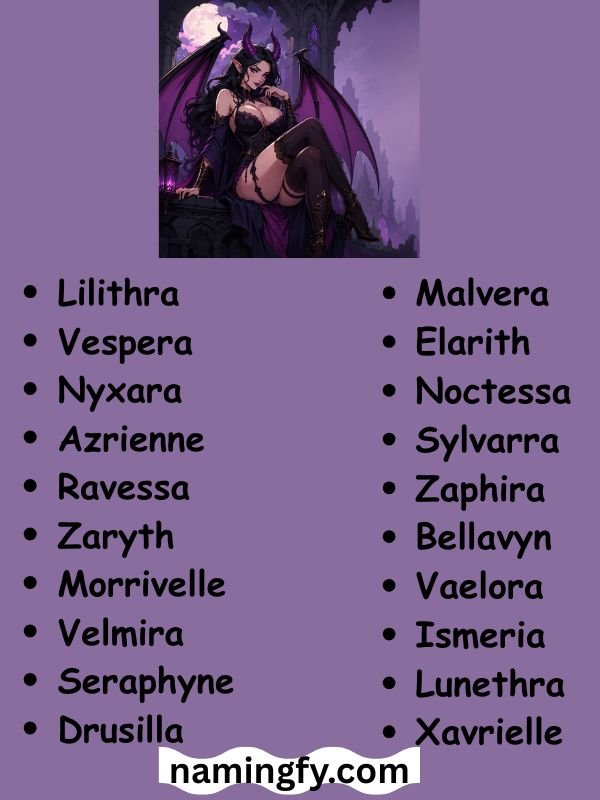
Not every succubus needs to sound scary. Cute succubus names work great for comedy anime, casual games, or lighthearted fantasy stories.
- Berrybloom
- Novawisp
- Cherry
- Lulu
- Berrykiss
- Pixieheart
- Bubblybelle
- Luludew
- Nova
- Cherrydew
- Sunny
- Lollikiss
- Mimidew
- Mimikiss
- Sugar
- Bubbly
- Honey
- Sunnykiss
- Ruby
- Fifidew
- Poppybloom
- Lulublossom
- Bellaheart
- Bella
- Fifibloom
- Bellaglow
- Fifisparkle
- Gigidew
- Rubypoof
- Dollydew
- Coco
- Lulustar
- Bellablossom
- Cocowisp
- Rosiebloom
Tip: Cute names work great when paired with a mischievous personality. The contrast between a sweet name and a sneaky character often makes for good comedy, especially in slice-of-life anime or lighthearted fantasy webcomics.
Succubus Names Japanese
Japanese-style succubus names tend to use soft syllables mixed with dark or mysterious meanings behind them. They fit anime and manga characters especially well.
Many of these names borrow from real Japanese naming conventions, where meaning often comes from the kanji rather than the sound alone. Even without kanji, the rhythm and structure alone can suggest a mysterious, moonlit character.
- Benihime
- Kurora
- Ranne
- Yumene
- Hoshiyo
- Ayayo
- Ranhime
- Tsukine
- Shinochi
- Yamihime
- Tsukichi
- Reiri
- Ranra
- Sayoyo
- Tsukira
- Yuiko
- Reihime
- Mioyo
- Kurori
- Reika
- Ranchi
- Ranka
- Suzuyo
- Suzura
- Kageko
- Reira
- Yuine
- Akane
- Suzuko
- Reichi
- Sayori
- Saena
- Saeko
- Miona
- Shinoka
Many of these names blend common Japanese name endings like “-ko,” “-mi,” and “-hime” with darker root words. This mix keeps them sounding authentic while still fitting a supernatural character, which is especially useful for creators writing original anime-inspired stories rather than adapting existing folklore directly.
If you enjoy building themed name lists like this, you might also like this collection of 1500+ Team Names for Cricket, which follows the same mix of stylish, fun, and creative naming ideas for a completely different topic.
Seductive Succubus Names
These names lean into charm, mystery, and allure. They suit a character built around temptation rather than fear.
This category often borrows imagery from luxury and nightlife, like velvet, wine, and shadow. That kind of imagery naturally suggests confidence and charm without needing extra description in the text.
- Amaella
- Vioyne
- Noiryra
- Vioyra
- Calora
- Scarleteve
- Lushessa
- Crimsoneve
- Silyne
- Sirenyra
- Velelle
- Sireneve
- Onyxique
- Sableisse
- Noirelle
- Scarletessa
- Velvetaine
- Emberosa
- Senlure
- Senisse
- Scarletlure
- Veleve
- Lushith
- Rhaelle
- Crimsonosa
- Viovine
- Velvetique
- Noirvine
- Sirenith
- Scarletella
- Crimsonella
- Silisse
- Noirara
- Callure
- Lushara
Tip: Seductive names often sound better when read aloud slowly. If a name flows smoothly in a sentence, it usually works well for this category, especially in romance-driven fantasy where the name itself becomes part of the character’s charm.
Evil Succubus Names
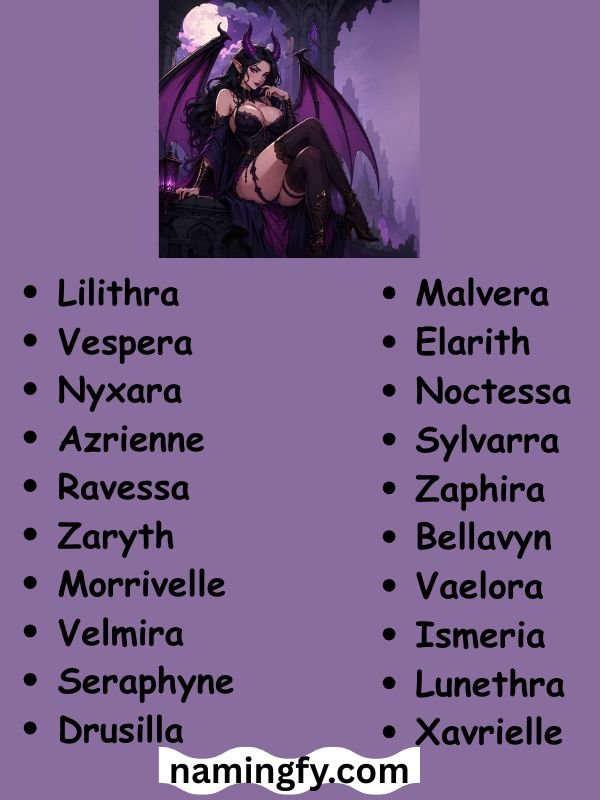
For villain-type succubi, harsher and heavier names work best. These fit dark fantasy, horror games, and demon-hunter style stories.
Hard consonant clusters and unusual letter combinations make these names feel unsettling even before a reader learns anything about the character. That instant impression is exactly what a strong villain name should deliver.
- Kalurgh
- Morurgh
- Zarothak
- Maluzka
- Urazra
- Ilynth
- Zarorven
- Vexazra
- Vorynth
- Malazkil
- Kroynth
- Kroothak
- Draazkil
- Nyxothak
- Azazuma
- Xerazkil
- Wraxuzka
- Draorax
- Gorithra
- Vazazra
- Gorazkil
- Kalivex
- Nyxithra
- Vazuzka
- Vorithra
- Gororven
- Wraxithra
- Ilymar
- Mororven
- Ilithra
- Tororven
- Hexazra
- Morothak
- Draivex
- Ilorven
Tip: Pair an evil succubus name with a short, ominous title like “the Soul Reaper” for extra impact in a character introduction. Villain names also work well when revealed gradually, letting the mystery build before the full name appears on the page.
Good Succubus Names
Some stories reimagine succubi as misunderstood or even kind characters. These softer names suit that redemption-style storyline.
This twist has become increasingly common in modern fantasy, where writers explore succubi choosing a different path from their demonic nature. A gentler name helps set that emotional tone from the very first introduction, giving readers a subtle hint that this character may break the usual mold.
- Miraora
- Caelyss
- Dawnora
- Opalaria
- Gaelessa
- Petraove
- Mirayss
- Quillith
- Irislyn
- Auriith
- Miralyn
- Miraessa
- Ranearia
- Kiriara
- Serenove
- Irisana
- Novalyn
- Joyith
- Irisith
- Raneora
- Gaeliel
- Sereniel
- Elyswen
- Fayeora
- Lyraove
- Petralyn
- Novaaria
- Novaove
- Serenwen
- Halolyn
- Kiriora
- Fayeith
- Quillara
- Novaiel
- Opalara
Tip: Good succubus names work well with light-related roots like “dawn,” “iris,” or “seren,” which naturally suggest warmth and hope.
Unique Succubus Names
Looking for something rare that nobody else has used? These names avoid common patterns while still sounding fantasy-appropriate.
If you plan to publish a book, launch a game character, or post fan content online, a distinctive name also makes searching and branding easier later. It reduces the chance of confusion with an already popular character.
A quick web search of your final choice before publishing can confirm whether it is already tied to another well-known character, which helps protect your project’s originality in the long run. This small step takes only a minute but can save real headaches after a character has already gained a following online.
- Mystille
- Ivorova
- Ozyille
- Luxyne
- Runeyne
- Thessaeth
- Umbreova
- Xylille
- Ivorille
- Wispith
- Umbreille
- Kyrayne
- Hyyra
- Graeyne
- Xylith
- Runeith
- Ozyora
- Runendra
- Ivorora
- Sylvndra
- Vhenyra
- Runeille
- Nyraost
- Kyraaeth
- Zyraana
- Runeesh
- Kyraesh
- Pyraora
- Vhenyne
- Quorael
- Hyost
- Vhenora
- Nyraana
- Runeaeth
- Ivorael
Tip: A truly unique name usually avoids common endings like “-ith” or “-ara” that appear across many other fantasy characters already.
D&D and RPG Succubus Names
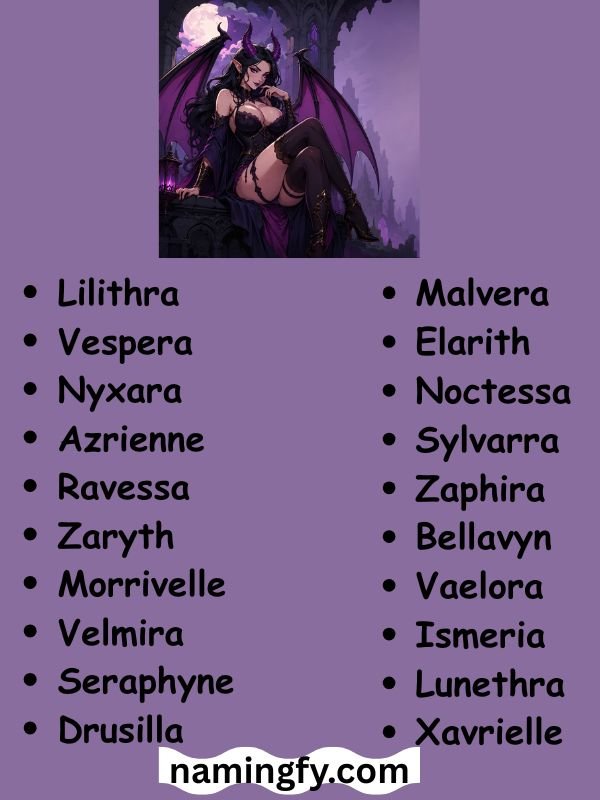
Tabletop games need names that sound powerful when spoken out loud during a campaign. These fit that dramatic tone perfectly.
Succubi and incubi are common fiend-type monsters in tabletop role-playing games, often used as recurring villains, tempters, or morally complex allies. A memorable name helps players recall the character across multiple game sessions, especially in longer campaigns that stretch over months.
- Myxax
- Myxynth
- Jynith
- Haelyssa
- Cyraax
- Gralael
- Lothax
- Vexax
- Morynth
- Kaelael
- Zeelorath
- Ashraorath
- Kryxadra
- Nythviss
- Gralyssa
- Myxyssa
- Cyraviss
- Ashraael
- Cyraune
- Haeladra
- Lothien
- Kaelith
- Ashraien
- Draael
- Draadra
- Vexorath
- Lothael
- Haelune
- Fazael
- Jynoth
- Iorayssa
- Zeelax
- Vexith
- Dezax
- Belviss
Tip: Check your campaign setting’s tone before picking a name. A grim dark setting fits names like Zeelorath, while a lighter setting suits softer options. Dungeon masters often keep a small list of backup names ready in case players interact with an unnamed monster mid-session.
Popular Succubus Names
These names show up most often across books, games, and fan communities. They strike a strong balance between dark and elegant.
Using a popular name can help readers instantly recognize the tone of your character, since these names already carry familiar associations from other media. This works well if you want your audience to immediately understand your character without much extra explanation.
That said, popular names come with a trade-off. If you plan to build an original character for publishing or a personal project, mixing in an invented surname or title alongside a popular first name can help you keep some originality while still benefiting from instant recognition.
- Lilith
- Nyxara
- Morrigan
- Astaroth
- Belphegora
- Jezebel
- Carmilla
- Vivienne
- Selene
- Roxandra
- Delphine
- Cassandra Noir
- Morgana Vex
- Isolde Dark
- Seraphine Kry
- Raone
- Jezyx
- Lygana
- Jezra
- Veandra
How to Create the Succubus Name
Building your own succubus name is easier than it looks once you follow a simple pattern. Here is a quick step-by-step method.
- Start with a dark or elegant root word like “Nyx,” “Vel,” or “Mor.”
- Add a soft ending such as “-ara,” “-ith,” or “-essa” for flow.
- Say the name out loud to check how smooth it sounds.
- Match the tone to your character’s personality, evil, cute, or seductive.
- Avoid names that are too long or hard to pronounce in dialogue.
- Search the name online first, so it does not clash with a well-known existing character.
- Write a short backstory sentence for the name, since this often reveals if it truly fits.
This method works for any fantasy character, not just succubi. It keeps names memorable while still sounding authentic to the genre.
A few common mistakes are worth avoiding too. Stacking too many hard consonants together can make a name hard to say out loud, and copying a famous character’s name too closely can feel lazy to readers. Overusing apostrophes or silent letters can also confuse readers unfamiliar with fantasy naming conventions, so it helps to keep spelling reasonably intuitive.
Keep a shortlist of three or four favorite names before deciding. Reading them next to your character’s full backstory usually makes the right choice obvious.
Quick Naming Checklist
Use this simple checklist before finalizing any name from this list or one you build yourself.
| Check | Why It Matters |
|---|---|
| Easy to pronounce | Readers skip names they cannot say in their head |
| Matches character tone | A cute name on a villain feels confusing |
| Not overused | Helps your character stand out from others |
| Fits the setting | Japanese-style names suit anime, not medieval fantasy |
| Sounds good aloud | Dialogue and voice acting need smooth flow |
Running through this short checklist takes less than a minute but saves a lot of second-guessing later. Many writers skip this step and end up renaming a character halfway through a project, which can confuse readers who already grew attached to the original name.
A name change midway through a published series can also hurt search visibility, since fans may keep searching for the old name long after the switch. Locking in a solid choice early avoids that problem entirely.
Frequently Asked Questions
What is a good succubus name?
A good succubus name sounds smooth, dark, and slightly mysterious. Names like Lilith, Velara, or Nyxara work well for most fantasy characters.
What is the difference between a succubus and an incubus?
A succubus is a female demon, while an incubus is the male version. Both are linked to dreams, seduction, and night visits in folklore.
Is Lilith a real succubus name?
Yes, Lilith comes from Jewish folklore and is the most famous succubus name in mythology. Many fantasy books and games still use it today.
Can succubus names be cute instead of scary?
Yes, many anime and comedy stories use soft, playful succubus names. Cute versions work well for lighter, more humorous storytelling.
What names are best for a D&D succubus character?
Sharp, powerful-sounding names work best for tabletop games. Names like Zeelorath or Ashraorath sound strong when spoken aloud at the table.
Where do succubus names originally come from?
Most originate from medieval European folklore, Jewish mysticism, and Christian demonology texts. Fantasy fiction later expanded and reshaped the naming style.
How do I create my own succubus name?
Combine a dark root word with a smooth ending sound. Test it out loud with your character’s backstory to see if it truly fits.
Conclusion
Choosing the right succubus name shapes how readers or players see your character instantly. Whether you want something evil, cute, seductive, or rooted in real mythology, this list gives you plenty of options to pick from.
Use these 520+ names as a starting point, then tweak spelling or sound until it feels truly yours. A strong name is often the first step toward building a character people remember, so take your time and trust what sounds right to you.
Bookmark this guide if you ever need fresh naming ideas for a future project, since the categories here cover almost every tone a fantasy, horror, or anime story could need. A well-chosen name can carry a character through an entire series, so it is always worth the extra few minutes to get it right.
For more background on demon folklore and mythology, you can check trusted resources like Britannica’s entry on demons in folklore.

Emma is a passionate writer and name enthusiast with over 5 years of experience exploring the meanings, origins, and hidden stories behind names.









1 thought on “520+ Succubus Names for 2026: Dark, Mythical & Fantasy Ideas”